 Skip to main content Skip to footer


When families begin planning a granny flat for wheelchair use, the conversation often starts with a few common features like wider doors or an accessible bathroom.
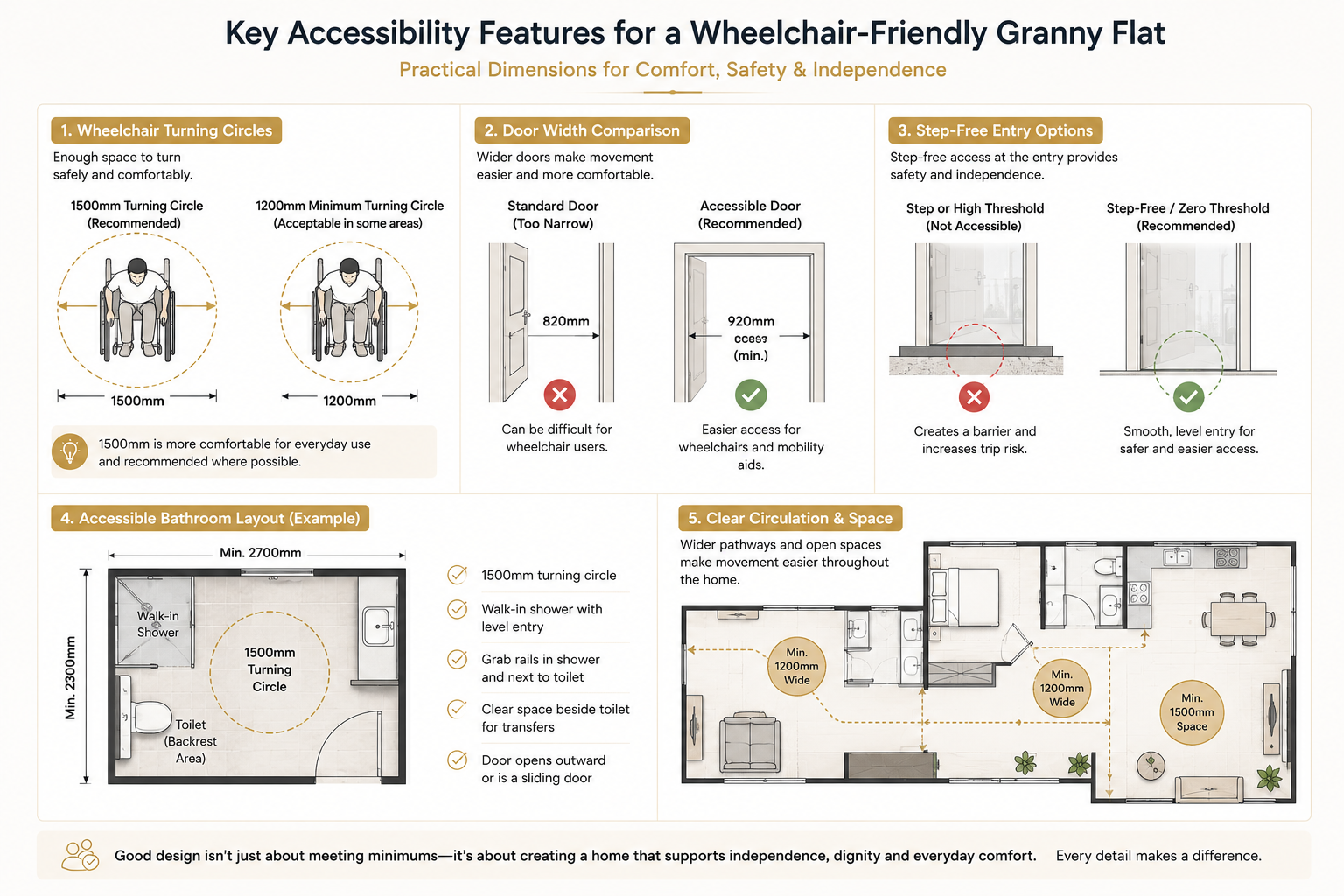
Those details can matter, but they are only part of the picture. A granny flat becomes more wheelchair-accessible when the whole design works together — from the site approach and entry path to the circulation inside the home, the bathroom layout, and how comfortably someone can move through everyday spaces.
At GrannyFlow, wheelchair-friendly planning starts with understanding how the person will actually live in and move through the home. That means looking at the property, the daily movement path, and the practical needs of the household before shaping the design.
Wheelchair Accessibility Starts Before the Front Door
One of the biggest misunderstandings is assuming wheelchair accessibility begins and ends inside the granny flat.
In reality, the external path to the dwelling can be just as important as the floor plan itself. If the route from the main house to the granny flat is awkward, steep, narrow, or difficult to navigate, the overall design may not work well in practice.
That is why wheelchair-friendly planning should also consider:
- site levels
- side access
- step-free threshold options
- ramp feasibility
- landing areas
- outdoor circulation
- the connection between the main dwelling and the granny flat
Accessibility does not stop at the front door. The movement path across the whole property matters.
Internal Circulation Needs to Feel Comfortable
A wheelchair-accessible granny flat should support movement through the home without creating unnecessary friction.
That includes how someone moves from the entry to the living area, through the kitchen, into the bathroom, and around the bedroom. If movement feels too tight, awkward, or interrupted, the space may technically fit certain features while still being difficult to use day to day.
Stronger internal circulation may involve:
- wider movement zones where needed
- more direct room-to-room flow
- fewer tight turns
- better spacing between furniture and fixtures
- clearer connection between key living areas
The aim is to create a home that feels easy to move through, not one that simply checks a few isolated boxes.
Bathroom Design Often Has the Biggest Impact
Bathroom planning is one of the most important parts of a wheelchair-friendly granny flat.
A bathroom that is too tight or poorly arranged can quickly become one of the hardest rooms to use. On the other hand, a well-planned bathroom can make a major difference to comfort, safety, and independence.
Depending on the household and the project, wheelchair-friendly bathroom design may involve:
- more open movement space
- easier shower access
- practical fixture positioning
- better turning room
- safer transitions through the space
- adaptable bathroom design where appropriate
The goal is not to make the bathroom feel institutional. It is to make it more usable in real life.
Entry Design and Thresholds Matter More Than Many People Expect
Wheelchair-friendly planning should give real attention to entry conditions.
A well-designed threshold and entry approach can improve everyday access significantly. Even when the internal layout works well, awkward entry design can reduce how practical the granny flat feels as a whole.
This is why entry planning often includes:
- step-free threshold options
- smoother indoor-outdoor transitions
- practical entry orientation
- easier access paths
- safer approach areas
These elements should be reviewed as part of the overall concept, not left until later.
Kitchen Planning Should Support Everyday Use
A kitchen can look visually clean but still be difficult to use in practice.
For wheelchair-friendly planning, the kitchen should support comfortable movement, practical reach, and clear working zones. That does not mean every kitchen needs the same response, but it does mean the layout should be shaped around real use rather than appearance alone.
Important considerations may include:
- clearer movement between work areas
- practical bench positioning
- easier access to storage
- stronger visibility and natural light
- a layout that feels efficient without becoming crowded
A kitchen that functions well every day can make a major difference to independence.
Bedroom and Living Areas Should Feel Easy to Use
Wheelchair accessibility is not only about specialist rooms. Bedroom and living areas matter just as much.
A bedroom should feel comfortable to enter, move around, and use without unnecessary restriction. The main living area should also feel open enough to move through easily and arranged in a way that supports everyday comfort rather than creating obstacles.
This is where a strong overall layout matters more than individual feature lists.
Not Every Project Needs the Same Design Response
One of the most important things to understand is that not every wheelchair-friendly granny flat will need the same solution.
Some households may require a stronger accessibility response from the beginning. Others may want wheelchair-considered planning now with more adaptability built in for later. The right design depends on the person, the site, and how the granny flat will actually be used.
That is why practical planning matters more than generic assumptions.
Builder-Led Planning Creates Better Outcomes
At GrannyFlow, wheelchair-friendly planning starts by understanding the daily living needs of the household and how the site works in real life.
That usually includes:
- understanding how the person needs to move through the space
- reviewing the movement path across the property
- checking access, levels, and entry conditions
- developing a suitable concept
- considering the likely approval pathway
- identifying where consultant input may be appropriate to the project
- providing a clearer direction on design and quotation
This helps create a result that feels practical, specific, and much more grounded from the start.
Wheelchair-Friendly Does Not Have to Feel Clinical
A wheelchair-friendly granny flat should still feel warm, modern, and comfortable.
The best outcomes do not look over-specialised or institutional. They feel like thoughtfully designed homes that happen to work better for the person using them. That is the difference between simply adding features and actually planning the home well.
Final Thoughts
A granny flat becomes more wheelchair-accessible when the whole design works together.
That includes the site approach, the entry path, the internal circulation, the bathroom layout, the kitchen usability, and the overall comfort of moving through the home every day.
The strongest starting point is not a feature checklist. It is understanding how the person needs to live, how the site behaves, and how the design can support both.
Final accessibility requirements may vary depending on the user’s needs, site conditions, design brief, approvals and any specialist consultant input required.
Find Out What You Can Build on Your Land
Planning a wheelchair-friendly, accessible or future-ready granny flat?
GrannyFlow can review your site, access, levels and likely approval pathway to help you understand what may be practical before moving into detailed design.
Find Out What You Can Build on Your Land
Explore Accessible Granny Flats in Sydney
FAQ
What makes a granny flat wheelchair accessible?
A wheelchair-accessible granny flat usually relies on the full design working together, including the site approach, step-free access options, internal circulation, bathroom planning, and practical room layout.
Are wider doors enough to make a granny flat wheelchair-friendly?
No. Wider doors can help, but wheelchair-friendly planning also depends on turning space, movement paths, entry design, bathroom access, and how the whole home functions in real life.
Does wheelchair accessibility include the outdoor path to the granny flat?
Yes. Accessibility should also consider side access, site levels, ramp feasibility, landing areas, and the movement path between the main house and the granny flat.
Can a wheelchair-friendly granny flat still feel modern and comfortable?
Yes. A well-designed wheelchair-friendly granny flat should still feel warm, modern, practical, and comfortable to live in.
Is a wheelchair-friendly granny flat the same as SDA housing?
Not necessarily. Wheelchair-friendly granny flat planning can support better movement and everyday usability, but SDA housing has separate requirements and assessment pathways. The right approach depends on the project, user needs and any specialist input required.


